0
0

Extended Gyroscope Measurement Range. The LSM6DSRTR's angular rate measurement extends to ±4000 dps, a full-scale setting that sets it apart from most 6-axis IMUs in its class. Fast-moving applications — such as drone flight controllers executing aggressive maneuvers, sports motion capture systems tracking rapid limb rotation, or gaming controllers detecting quick wrist flicks — generate angular velocities that can saturate conventional ±2000 dps gyroscopes. The extended range ensures valid data through the entire motion envelope without clipping artifacts.
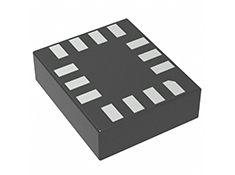
High Stability Over Temperature and Time. ST has engineered the LSM6DSRTR with an enhanced mechanical design that minimizes bias and offset drift, along with temperature-related parameter variation. This stability translates directly into system-level benefits: the host processor can avoid running frequent, power-consuming recalibration routines, preserving both computational bandwidth and battery life while maintaining measurement accuracy across the full operating temperature range of −40 °C to +85 °C.
Dedicated Auxiliary SPI for OIS Data Output. A particularly valuable feature for camera-equipped systems is the LSM6DSRTR's auxiliary SPI interface, which provides a dedicated data path for optical image stabilization (OIS) data from both the gyroscope and accelerometer sensors. This auxiliary channel operates independently of the main processor interface, allowing an OIS controller to receive low-latency motion data while the application processor simultaneously accesses the same sensor through I²C, SPI, or MIPI I3C℠. The device includes a dedicated configurable signal processing path for OIS, completely separate from the user interface signal path.
Smart FIFO with Compression. The LSM6DSRTR incorporates a 9 kbyte Smart FIFO that supports data compression up to three times, enabling efficient dynamic data batching. This buffering capability allows the host processor to remain in a low-power state for extended periods while the sensor autonomously collects motion data, a critical enabler for always-on sensing in battery-operated devices.
Programmable Finite State Machine. The embedded programmable finite state machine (FSM) can process data from the accelerometer, gyroscope, and external sensors, enabling gesture recognition and motion pattern detection without continuous host intervention. Standard interrupt sources include free-fall, wake-up, 6D/4D orientation, and click/double-click detection.
Comprehensive Serial Interface Support. The device offers SPI, I²C, and MIPI I3C℠ serial interfaces, with main processor data synchronization and support for Qualcomm's S4S (Synchronization for Sensors) specification.
|
Parameter |
Specification |
|
Accelerometer Full Scale |
±2 / ±4 / ±8 / ±16 g |
|
Gyroscope Full Scale |
±125 / ±250 / ±500 / ±1000 / ±2000 / ±4000 dps |
|
Output Data Rate |
Up to 6.66 kHz (accel. & gyro.) |
|
Gyroscope Sensitivity |
4.375 mdps/LSB (±125 dps) to 140 mdps/LSB (±4000 dps) |
|
Gyroscope Noise Density |
5 mdps/√Hz (high-performance mode) |
|
FIFO |
9 kbyte Smart FIFO with compression |
|
Analog Supply Voltage |
1.71 V to 3.6 V |
|
Serial Interfaces |
SPI / I²C / MIPI I3C℠ |
|
Auxiliary Interface |
SPI for OIS data output |
|
Operating Temperature |
−40 °C to +85 °C |
|
Package |
LGA-14L, 2.5 × 3.0 × 0.86 mm |
|
Embedded Temperature Sensor |
Yes |
|
Compliance |
ECOPACK, RoHS, “Green” |
The gyroscope sensitivity spans a wide dynamic range, from 4.375 mdps/LSB at the most sensitive ±125 dps setting to 140 mdps/LSB at ±4000 dps, allowing developers to trade resolution for measurement range according to application requirements. The accelerometer and gyroscope can each operate at output data rates up to 6.66 kHz, supporting high-bandwidth motion capture and vibration analysis.
The LSM6DSRTR operates as a self-contained motion sensing subsystem, not merely a pair of passive sensor elements. Its functional architecture encompasses several layers of processing and data management.
Sensing Element Layer. At the physical level, the device contains micromachined capacitive sensing structures for three orthogonal axes of acceleration and three orthogonal axes of angular rate. An embedded temperature sensor provides compensation reference and environmental monitoring data.
Signal Conditioning and Conversion. Analog signals from the sensing elements are conditioned, digitized through 16-bit ADCs, and filtered through configurable digital filters before reaching the output registers or FIFO. Separate signal processing paths exist for user interface data and OIS data, ensuring that image stabilization functions remain responsive even when the main data path is configured for low-power operation.
Data Management Layer. The 9 kbyte Smart FIFO can be partitioned flexibly, with the ability to store timestamps and apply compression ratios of 2× or 3× depending on the data patterns. This enables efficient burst-mode operation where the host wakes periodically to drain accumulated motion data rather than polling continuously.
Embedded Processing. The programmable FSM allows developers to define custom state-based logic that examines sensor data streams and asserts interrupt signals when specific motion patterns are detected. This hardware-level decision-making reduces system latency and host workload simultaneously.
Connectivity Layer. The device presents a flexible pin configuration that supports four distinct connection modes. Mode 1 provides I²C/MIPI I3C slave or SPI (3- and 4-wire) interface. Mode 2 adds I²C master capability for connecting external sensors. Modes 3 and 4 enable the auxiliary SPI interface for OIS applications, with Mode 3 exposing gyroscope data only and Mode 4 exposing both accelerometer and gyroscope data through the auxiliary channel.
Virtual and Augmented Reality. VR and AR headsets demand motion-to-photon latency below 20 ms to prevent user discomfort, and the accuracy of head-tracking directly determines the quality of the immersive experience. The LSM6DSRTR's high output data rate, low-latency auxiliary SPI path, and stable bias characteristics make it well-suited for the rapid head rotations and sustained precision requirements of these applications. ST specifically identifies VR and AR as target use cases for this device.
Optical Image Stabilization for Cameras. Drone-mounted cameras and smartphone camera modules require continuous, low-latency motion data to counteract handshake and vibration. The LSM6DSRTR's auxiliary SPI interface allows a dedicated OIS controller to receive gyroscope data at high rates without burdening the application processor, while the main interface remains available for other system functions.
Robotics and Drones. Flight controllers in multirotor drones must process gyroscope data at high rates to maintain stable attitude control. The ±4000 dps range accommodates aggressive aerobatic maneuvers, while the high stability over temperature ensures consistent control loop behavior as the drone's electronics warm during operation.
Wearable Devices and Activity Tracking. The LSM6DSRTR embeds native advanced pedometer, step-detector, and step-counter functions, along with significant-motion detection and tilt detection, enabling accurate activity recognition with minimal host involvement. Its compact 2.5 × 3.0 mm footprint suits space-constrained wearable form factors.
Industrial and Sports Applications. The industrial temperature rating (−40 °C to +85 °C) and the device's stability characteristics support use in motion capture for sports performance analysis, industrial vibration monitoring, and precision positioning systems where measurement drift would degrade long-term accuracy.
Integrating the LSM6DSRTR into a system design involves several practical considerations. The device operates from a single analog supply voltage between 1.71 V and 3.6 V, making it compatible with both 1.8 V and 3.3 V digital systems without additional level shifting. The flexible pin configuration supports multiple connection topologies, allowing designers to select the mode that best matches their host architecture.
The 9 kbyte FIFO, combined with compression, provides substantial buffering capacity. In a typical wearable application where the sensor samples at 52 Hz, the FIFO can store several seconds of motion data, allowing the host to remain in sleep mode for extended intervals and dramatically reducing average system power consumption.
For OIS applications, the auxiliary SPI interface is enabled by setting the OIS_EN_SPI2 bit in the SPI2_CTRL1_OIS register, and the device includes dedicated OIS signal processing that operates independently of the user interface data path-. This architectural separation ensures that camera stabilization data continues to flow even when the main interface is idle or operating at reduced rates.
The LSM6DSRTR occupies a distinct position in the 6-axis IMU landscape. Its extended ±4000 dps gyroscope range addresses applications where angular velocity measurement cannot be allowed to saturate. Its stability specifications — particularly over temperature — reduce long-term drift concerns that plague less rigorously engineered sensors. The dedicated auxiliary SPI for OIS data, combined with the programmable FSM and 9 kbyte FIFO, provides system architects with tools to partition motion processing between the sensor and the host in ways that optimize both responsiveness and power efficiency. For designs where motion fidelity, dynamic range, and long-term reliability are primary requirements, the LSM6DSRTR delivers a well-integrated solution.
WELL LINK CHIPS GROUP CO.,LIMITED FLAT/RM 1802 BEVERLY HOUSE 93-107 LOCKHART ROAD WANCHAI HK