0
0

The STM32L471RGT6 is an ultra-low-power microcontroller from STMicroelectronics built around the ARM Cortex-M4 32-bit RISC core with floating-point unit (FPU), operating at frequencies up to 80 MHz. It integrates 1 Mbyte of Flash memory and 128 Kbytes of SRAM in a 64-pin LQFP package measuring 10 × 10 × 1.4 mm, delivering 100 DMIPS of processing performance with exceptional energy efficiency.
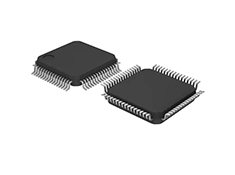
What defines the STM32L471RGT6 is its FlexPowerControl architecture, which enables seven distinct low-power modes ranging from 100 µA/MHz in run mode down to 30 nA in shutdown mode. This power flexibility allows system designers to match energy consumption to computational demand on a moment-by-moment basis, extending battery life in portable and energy-harvesting applications without sacrificing processing capability when it is needed.
The FlexPowerControl architecture provides multiple power domains and operating modes that can be dynamically managed by firmware. The device consumes just 100 µA/MHz in run mode, 1.1 µA in Stop 2 mode, and 120 nA in standby mode with five wakeup pins. In VBAT mode, current consumption drops to 300 nA while maintaining the real-time clock and 32 backup registers.
The ARM Cortex-M4 core with FPU delivers 100 DMIPS at 80 MHz (1.25 DMIPS/MHz) and includes DSP instructions for efficient signal processing. The Adaptive Real-Time (ART) Accelerator allows zero-wait-state execution from Flash memory, eliminating the performance penalty typically associated with executing code from embedded non-volatile memory.
With 1 Mbyte of Flash memory organized in two banks supporting read-while-write operation and 128 Kbytes of SRAM including 32 Kbytes with hardware parity check, the STM32L471RGT6 provides ample storage for complex application code and data buffers. The dual-bank Flash architecture enables firmware updates without interrupting application execution.
The device integrates three 12-bit ADCs with 5 Msps conversion rate and hardware oversampling for up to 16-bit effective resolution, two 12-bit DACs, two operational amplifiers with programmable gain, and two ultra-low-power comparators. These analog resources allow direct interfacing with sensors and analog signals without external signal conditioning components.
Up to 19 communication interfaces are available, including three I²C ports supporting FM+ (1 Mbit/s), five USARTs, one low-power UART with Stop 2 wake-up capability, three SPIs, one Quad SPI, CAN 2.0B, USB OTG, SDMMC, and a single-wire protocol master interface (SWPMI). This interface density supports complex system architectures with multiple external devices.
Up to 24 capacitive sensing channels support touchkey, linear, and rotary touch sensor implementations. This integrated touch capability eliminates the need for external touch controller ICs in user interface designs, reducing component count and board space.
|
Parameter |
Specification |
|
Core |
ARM Cortex-M4 with FPU |
|
Max Frequency |
80 MHz |
|
DMIPS |
100 (1.25 DMIPS/MHz) |
|
Flash Memory |
1 Mbyte (2 banks, read-while-write) |
|
SRAM |
128 Kbytes (32 KB with parity) |
|
Operating Voltage |
1.71 V to 3.6 V |
|
Temperature Range |
-40 °C to 85 °C |
|
Run Mode Current |
100 µA/MHz |
|
Stop 2 Mode |
1.1 µA (1.4 µA with RTC) |
|
Standby Mode |
120 nA (5 wakeup pins) |
|
Shutdown Mode |
30 nA (5 wakeup pins) |
|
VBAT Mode |
300 nA (RTC + backup registers) |
|
Wakeup Time (Stop) |
4 µs |
|
ADC |
3 × 12-bit, 5 Msps, up to 16-bit oversampling |
|
DAC |
2 × 12-bit |
|
Timers |
16 total (advanced, general-purpose, basic, low-power) |
|
I/O Pins |
51, most 5 V-tolerant |
|
Package |
LQFP64, 10 × 10 × 1.4 mm |
|
Grade |
Industrial |
The device's operating voltage range of 1.71 V to 3.6 V accommodates direct operation from single-cell batteries and regulated 1.8 V or 3.3 V rails without additional regulation. The 4 µs wakeup time from Stop mode enables responsive event-driven operation with minimal energy overhead.
The Cortex-M4 core is coupled with the ART Accelerator, which prefetches and caches instructions from Flash memory to enable zero-wait-state execution. The memory protection unit (MPU) enhances application security by defining access permissions for different memory regions. The dual-bank Flash architecture supports read-while-write operations for firmware update and data logging applications.
The FlexPowerControl architecture partitions the device into multiple power domains. The low-power timers can operate in Stop mode, enabling periodic wakeup without waking the main core. The batch acquisition mode (BAM) allows data acquisition from peripherals while the core is in a low-power state, further reducing energy consumption in sensor monitoring applications.
The three ADCs can be interleaved for higher effective sample rates, and hardware oversampling improves resolution for low-bandwidth signals. The operational amplifiers with built-in programmable gain stages (PGA) can condition small sensor signals before digitization. The ultra-low-power comparators enable threshold detection with minimal power consumption.
The interconnect matrix allows peripherals to communicate directly without CPU intervention, reducing processing load and power consumption. The low-power UART can wake the device from Stop 2 mode on incoming data, enabling always-listening communication with minimal energy expenditure. The SWPMI interface provides a single-wire protocol for compact system interconnects.
The STM32L471RGT6's combination of ultra-low-power modes, rich peripheral set, and 1 Mbyte Flash makes it ideal for battery-operated IoT sensor nodes. In applications such as environmental monitoring, asset tracking, and smart metering, the device can remain in Stop mode for extended periods, waking only to acquire sensor data or transmit readings.
In smartwatches, fitness trackers, and medical wearables, the device's low run-mode current and fast wakeup enable responsive user interfaces without exhausting battery life. The integrated capacitive sensing supports touch-based interaction, while the DSP-capable core can process motion data from external sensors.
For blood glucose monitors, pulse oximeters, and portable diagnostic equipment, the STM32L471RGT6 provides the analog precision and low power consumption required for reliable measurement in battery-powered handheld instruments.
The wide temperature range and robust peripheral set support use in industrial sensor nodes, motor control applications, and process monitoring equipment. The CAN interface enables integration into industrial networks, while the operational amplifiers and comparators facilitate direct sensor interfacing.
The extremely low power consumption in standby and shutdown modes, combined with the 1.71 V minimum operating voltage, makes the device suitable for energy-harvesting applications where power availability is intermittent and limited.
The STM32L471RGT6's 64-pin LQFP package provides 51 I/O pins, most of which are 5 V-tolerant, simplifying interfacing with legacy peripherals and industrial sensors. The pinout is designed to facilitate PCB routing, with power and ground pins strategically placed to minimize noise coupling between the analog and digital domains.
The device includes a brown-out reset (BOR) function in all modes except shutdown, protecting against unreliable operation during power supply transients. The 96-bit unique device ID and true random number generator (TRNG) support secure applications requiring device authentication and cryptographic key generation.
The STM32L471RGT6 combines the processing power of the ARM Cortex-M4 core with the energy efficiency demanded by modern battery-operated systems. Its FlexPowerControl architecture provides seven low-power modes, enabling energy consumption to be precisely matched to application requirements. With 1 Mbyte of Flash, 128 Kbytes of SRAM, rich analog peripherals, and up to 19 communication interfaces, the device offers the resources needed for complex embedded applications without compromising on power efficiency. For designers of portable, wearable, and IoT devices where every microampere counts, the STM32L471RGT6 delivers a compelling balance of performance and energy economy.
WELL LINK CHIPS GROUP CO.,LIMITED FLAT/RM 1802 BEVERLY HOUSE 93-107 LOCKHART ROAD WANCHAI HK