0
0

The HMC558ALC3BTR from Analog Devices is a general-purpose, double-balanced mixer fabricated using gallium arsenide (GaAs) metal-semiconductor field-effect transistor (MESFET) monolithic microwave integrated circuit (MMIC) technology. Operating across a 5.5 GHz to 14 GHz frequency range, this passive mixer functions as either an upconverter or downconverter without requiring external components or matching circuits. Its leadless 12-terminal ceramic surface-mount package measures just 2.9 mm × 2.9 mm, making it suitable for high-density RF and microwave assemblies where board space is at a premium.
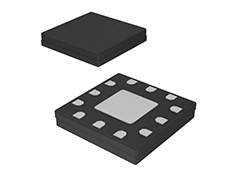
The HMC558ALC3BTR is distinguished by its optimized balun structure, which delivers excellent LO-to-RF and LO-to-IF isolation performance while operating with a low local oscillator drive level of as little as +9 dBm. This combination of wide frequency coverage, high isolation, and low drive requirements positions the device for use in point-to-point microwave radios, military communication systems, test and measurement equipment, and sensor applications.
Broad Frequency Coverage. The HMC558ALC3BTR operates across the 5.5 GHz to 14 GHz band, covering portions of the C-band, X-band, and Ku-band. This wide tuning range enables a single mixer design to address multiple frequency plans, reducing inventory complexity and simplifying system architecture in multi-band RF platforms.-
Passive Double-Balanced Topology. The double-balanced mixer architecture provides inherent suppression of even-order intermodulation products and LO leakage at the RF and IF ports. Because the topology is passive, no DC bias supply is required for the mixing function, simplifying power management and eliminating bias-related noise contributions. The GaAs MESFET process provides the linearity and switching speed necessary for reliable frequency conversion at microwave frequencies.
Low Conversion Loss. The HMC558ALC3BTR exhibits a conversion loss of 7.5 dB typical across the 5.5 GHz to 10 GHz range, with comparable performance extending to 14 GHz. This low loss preserves signal-to-noise ratio through the conversion stage, which is particularly important in receiver front-ends where mixer loss directly degrades system noise figure.-
High Port-to-Port Isolation. The optimized balun design delivers LO-to-RF isolation of 45 dB typical and LO-to-IF isolation of 45 dB typical across the operating band. High isolation between the LO and RF/IF ports reduces LO leakage into sensitive receiver chains and minimizes the risk of LO signal re-radiation from antenna ports, both of which are critical considerations in dense multi-channel systems.-
Low LO Drive Requirement. The mixer operates effectively with LO drive levels as low as +9 dBm, reducing the output power requirement for the LO source. This can simplify LO chain design, lower power consumption in the synthesizer, and reduce thermal management demands in compact assemblies.
Wide IF Bandwidth. The IF port supports frequencies from DC to 6 GHz, providing substantial flexibility in frequency planning for both upconversion and downconversion architectures. This wide IF range accommodates high-data-rate modulation schemes and enables direct conversion or low-IF receiver topologies.
Robust Linearity. The input third-order intercept point (IIP3) of 21 dBm typical and input 1 dB compression point (P1dB) of 11.5 dBm typical indicate strong linearity performance for a passive mixer in this frequency range. These characteristics are essential in receiver applications where strong adjacent-channel signals must be handled without generating intermodulation products that degrade sensitivity.
|
Parameter |
Specification |
|
RF Frequency Range |
5.5 GHz to 14 GHz |
|
LO Frequency Range |
5.5 GHz to 14 GHz |
|
IF Frequency Range |
DC to 6 GHz |
|
Conversion Loss |
7.5 dB typ. (5.5–10 GHz) |
|
LO-to-RF Isolation |
45 dB typ. |
|
LO-to-IF Isolation |
45 dB typ. |
|
Input IP3 (IIP3) |
21 dBm typ. |
|
Input P1dB |
11.5 dBm typ. |
|
LO Drive Level |
+9 dBm minimum |
|
Supply Current |
3 mA |
|
RF Input Power (Max) |
25 dBm |
|
LO Input Power (Max) |
25 dBm |
|
IF Input Power (Max) |
25 dBm |
|
Operating Temperature |
−40 °C to +85 °C |
|
Storage Temperature |
−65 °C to +150 °C |
|
Package |
12-terminal ceramic LCC, 2.9 × 2.9 mm |
|
Process Technology |
GaAs MESFET MMIC |
The mixer’s maximum input power ratings of 25 dBm for RF, LO, and IF ports provide substantial headroom for system-level power variations and transient conditions. The maximum junction temperature of 175 °C and storage temperature range of −65 °C to +150 °C support reliable operation in demanding environmental conditions typical of military and aerospace platforms.
Mixer Core. The HMC558ALC3BTR employs a double-balanced ring mixer topology implemented in GaAs MESFET technology. The balanced configuration uses four switching devices arranged in a ring, driven by the LO signal through a balun transformer. This arrangement inherently cancels even-order mixing products and provides the high port-to-port isolation characteristic of the design.
Balun Transformers. Optimized balun structures at the RF and LO ports perform single-ended-to-balanced conversion while providing impedance transformation and isolation between ports. The balun design is a primary determinant of the mixer’s isolation performance, and the HMC558ALC3BTR’s baluns are specifically engineered to achieve the 45 dB typical isolation specification.
Passive Operation. The device requires no DC bias for the mixing function. The only supply current specified (3 mA) relates to any internal monitoring or control circuitry, not the mixer core itself. This passive operation eliminates bias-induced noise, simplifies power sequencing, and contributes to the device’s reliable, repeatable performance across temperature and frequency.
Surface-Mount Integration. The leadless ceramic package is compatible with high-volume surface-mount manufacturing processes and requires no wire bonding. The RoHS-compliant package construction includes a gold-over-nickel metallization system, ensuring reliable solder joint formation in standard reflow assembly.
Point-to-Point Microwave Radios. The 5.5 GHz to 14 GHz range encompasses critical bands for point-to-point microwave backhaul links. The HMC558ALC3BTR’s high isolation and low conversion loss make it suitable for both transmit upconversion and receive downconversion in these systems, where reliable frequency conversion directly impacts link budget and data throughput.-
Point-to-Multipoint Radios. In point-to-multipoint architectures, the mixer’s linearity performance (21 dBm IIP3) helps maintain signal fidelity in the presence of multiple simultaneous carriers, while the wide IF bandwidth accommodates the channelized signals typical of these systems.
Military and Space Systems. Analog Devices identifies military end-use and space applications as target domains for the HMC558ALC3BTR. The device’s −40 °C to +85 °C operating temperature range, robust construction, and consistent performance across the full frequency band support use in radar, electronic warfare (EW), and secure communication platforms where environmental extremes and reliability requirements are demanding.
Test Equipment and Sensors. The mixer’s broad frequency coverage and repeatable conversion characteristics suit use in automatic test equipment (ATE), instrumentation, and sensor systems requiring frequency translation. Its passive operation and low LO drive requirement simplify integration into test setups where multiple LO sources may be shared across measurement channels.
Commercial Microwave and Aviation Communication. The HMC558ALC3BTR’s combination of wide bandwidth, compact footprint, and reliable surface-mount assembly supports commercial microwave appliances and aviation communication systems where SWaP (size, weight, and power) constraints are significant design drivers.
The HMC558ALC3BTR’s passive operation and absence of external matching requirements simplify RF board design. The device can be placed directly in the signal chain without the lumped-element matching networks often required by active mixers, reducing bill-of-materials count and minimizing parasitic effects that can degrade performance at microwave frequencies.
The low LO drive requirement of +9 dBm allows designers to select LO sources with modest output power, reducing the DC power consumption and thermal dissipation of the synthesizer chain. In multi-channel systems, a single LO distribution network may be able to drive multiple mixers without additional amplification, further simplifying system architecture.
The 2.9 × 2.9 mm ceramic package provides a hermetic-equivalent environmental barrier and the thermal conductivity necessary to dissipate heat generated during high-power operation. The leadless construction and gold-over-nickel metallization ensure compatibility with standard surface-mount reflow processes.
The HMC558ALC3BTR provides a well-balanced combination of wide frequency coverage, high port-to-port isolation, low conversion loss, and robust linearity for RF and microwave frequency conversion applications spanning 5.5 GHz to 14 GHz. Its passive double-balanced GaAs MESFET construction eliminates bias complexity while delivering the isolation and linearity performance required in demanding receiver and transmitter architectures. The compact leadless ceramic package and surface-mount compatibility support high-density, high-reliability system designs in point-to-point radios, military platforms, test equipment, and commercial microwave systems. For engineers seeking a general-purpose mixer that performs consistently across the C-, X-, and Ku-bands without external matching or complex LO drive requirements, the HMC558ALC3BTR offers a production-proven solution.
WELL LINK CHIPS GROUP CO.,LIMITED FLAT/RM 1802 BEVERLY HOUSE 93-107 LOCKHART ROAD WANCHAI HK