0
0

The LSM6DSLTR from STMicroelectronics is a system-in-package 6-axis inertial measurement unit (IMU) that combines a 3-axis digital accelerometer and a 3-axis digital gyroscope in a compact LGA-14L package measuring just 2.5 mm × 3.0 mm × 0.83 mm. Engineered for battery-operated devices where continuous motion sensing is essential, this device achieves a combo high-performance current consumption of only 0.65 mA while delivering the measurement fidelity required for smartphones, wearables, IoT edge nodes, and consumer electronics.
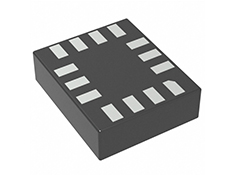
The LSM6DSLTR belongs to ST’s iNEMO inertial module family, which leverages mature MEMS micromachining processes combined with CMOS interface circuitry that is trimmed to match the characteristics of the sensing elements.This manufacturing approach produces a sensor that balances three often-competing objectives: low power consumption for extended battery life, high accuracy for reliable motion tracking, and robust mechanical shock tolerance for dependable operation in real-world conditions.
Dual-Mode Power Architecture. The LSM6DSLTR offers two primary operating configurations. In combo normal mode, the device draws 0.4 mA while both the accelerometer and gyroscope operate simultaneously. Switching to combo high-performance mode raises current consumption to 0.65 mA while improving noise performance and measurement stability. This dual-mode architecture allows firmware to dynamically select the appropriate power-performance trade-off based on operational context — conserving energy during routine activity tracking and shifting to high-performance mode when gesture recognition or precise orientation estimation demands it.
Always-On Sensing for Both Sensors. The device provides an “always-on” experience with low power consumption for both the accelerometer and gyroscope, eliminating the need to duty-cycle between sensing elements. Both sensors can remain active continuously without exhausting battery reserves in portable applications.
Smart FIFO with Dynamic Batching. A Smart FIFO with 4 kbyte capacity supports dynamic data batching, allowing the host processor to remain in a low-power state for extended intervals while the sensor autonomously accumulates motion data. The FIFO is configurable based on the active feature set, enabling efficient burst-mode operation where the host wakes periodically to drain accumulated samples rather than polling continuously.
Embedded Motion Intelligence. The LSM6DSLTR embeds native hardware functions for pedometer, step detector, step counter, significant motion detection, and tilt detection. These functions operate independently of the host processor, enabling activity tracking and motion context awareness even when the application processor is in deep sleep or powered down. Standard interrupt sources include free-fall, wake-up, 6D/4D orientation recognition, and single/double-click detection.
Android Compliance and Sensor Fusion Support. The device is compliant with Android K, L, and M requirements, supporting real, virtual, and batch sensor configurations. Hard and soft ironing correction for external magnetic sensors is built in, facilitating accurate magnetometer integration for heading estimation and orientation fusion algorithms.
Robust Interface Suite. The LSM6DSLTR provides SPI and I²C serial interfaces with a main processor data synchronization feature. An independent I/O supply operating at 1.62 V enables direct interface with low-voltage application processors without external level shifting, simplifying power tree design in compact systems.
|
Parameter |
Specification |
|
Accelerometer Full Scale |
±2 / ±4 / ±8 / ±16 g |
|
Gyroscope Full Scale |
±125 / ±245 / ±500 / ±1000 / ±2000 dps |
|
Output Data Rate |
Up to 6.66 kHz |
|
Resolution |
16-bit |
|
FIFO |
4 kbyte Smart FIFO |
|
Host Interface |
SPI / I²C with data synchronization |
|
I/O Supply Voltage |
1.62 V (independent) |
|
Analog Supply Voltage |
1.71 V to 3.6 V |
|
Current (Combo Normal) |
0.4 mA typ. |
|
Current (Combo High-Performance) |
0.65 mA typ. |
|
Standby Current |
3 µA |
|
Accelerometer Noise Density |
90 µg/√Hz (high-performance mode) |
|
Gyroscope Rate Noise Density |
0.008 °/s/√Hz |
|
Operating Temperature |
−40 °C to +85 °C |
|
Package |
LGA-14L, 2.5 × 3.0 × 0.83 mm |
|
Embedded Temperature Sensor |
Yes |
|
Compliance |
Android K/L/M; ECOPACK; RoHS |
The gyroscope rate noise density of 0.008 °/s/√Hz enables precise angular rate measurement for orientation tracking and gesture recognition. The accelerometer noise density of 90 µg/√Hz provides sufficient resolution for activity classification and step detection while maintaining low power operation.- The compact 2.5 × 3.0 mm footprint and 0.83 mm height suit space-constrained designs including TWS earbuds and ultra-thin wearables.
Sensing Element Layer. The device contains micromachined capacitive sensing structures for three orthogonal axes of acceleration and three axes of angular rate. An embedded temperature sensor provides environmental reference data for compensation and monitoring. The sensing elements are fabricated using specialized micromachining processes, while the IC interface is developed using CMOS technology trimmed to match the characteristics of the sensing element.
Signal Processing Chain. Analog signals from the sensing elements are digitized through 16-bit ADCs and filtered through configurable digital filters before reaching output registers or the FIFO. The accelerometer and gyroscope each have independent output data rate and full-scale settings, allowing asymmetric configurations optimized for specific use cases. Low-power and high-performance modes offer distinct noise-bandwidth trade-offs.
Event Detection Layer. Hardware event detection logic continuously examines sensor data against programmed thresholds for free-fall, wake-up, orientation changes, and tap events. These functions operate autonomously, asserting interrupts only when conditions are met, which eliminates the need for continuous host polling and reduces system-level power consumption.
Data Management Layer. The 4 kbyte Smart FIFO supports batching of accelerometer, gyroscope, and external sensor data with optional timestamping. FIFO threshold interrupts notify the host when sufficient data has accumulated, enabling efficient burst-mode operation that dramatically reduces average system current in always-on applications.
Connectivity Layer. The LSM6DSLTR supports SPI and I²C interfaces with a main processor data synchronization feature. The independent I/O supply at 1.62 V allows direct connection to low-voltage processors without level shifting, reducing component count and board space.
Smartphones and Mobile Devices. The LSM6DSLTR supports Android compliance requirements including real, virtual, and batch sensors, making it directly compatible with smartphone motion processing frameworks. Its applications include screen orientation, tap detection, step counting, and camera image stabilization assist. The ultra-low-power always-on capability preserves battery life in devices where users expect continuous motion responsiveness.
Wearable Devices and Hearables. In smartwatches, fitness bands, and true wireless stereo (TWS) earbuds, the LSM6DSLTR’s compact footprint and low power consumption enable continuous activity tracking and gesture control without sacrificing battery life. The embedded pedometer and significant motion detection functions operate in hardware, reducing host processing overhead in devices with limited computational resources.
Battery-Operated IoT Sensors. For IoT edge nodes requiring motion detection, the LSM6DSLTR’s event-driven architecture allows the host processor to remain in sleep mode until a meaningful motion event occurs. In indoor navigation and dead-reckoning applications, the fusion of inertial signals with algorithms such as step counting becomes feasible with this device’s noise performance and power profile.-
Gaming Controllers and AR/VR Input. The low-latency interrupt response and programmable full-scale ranges of the LSM6DSLTR support motion-based gaming controllers and AR/VR input devices. The ±2000 dps gyroscope range captures rapid rotational movements during gameplay, while the accelerometer detects tilt and orientation for intuitive control schemes.
Vibration and Industrial Monitoring. Despite its consumer-oriented design, the LSM6DSLTR’s high robustness to mechanical shock and industrial temperature rating make it suitable for vibration monitoring in industrial monitoring nodes and IoT edge devices, where it can detect anomalous motion patterns and trigger maintenance alerts.
The LSM6DSLTR’s power architecture provides system designers with meaningful flexibility. In a typical wearable application sampling at 52 Hz, the Smart FIFO can buffer several seconds of motion data, allowing the host processor to sleep between batch reads. The combination of 0.4 mA combo normal mode and 3 µA standby current enables duty-cycled sensing strategies that can extend battery life to multiple days in portable devices.
The embedded pedometer and step detection functions are calibrated at the factory and require no host-side algorithm development, accelerating time-to-market for fitness tracking products. For applications requiring orientation estimation, the hard and soft ironing correction for external magnetic sensors simplifies the integration of a magnetometer for 9-axis sensor fusion.
The LSM6DSLTR delivers a carefully engineered combination of ultra-low power consumption, embedded motion intelligence, and compact physical integration. Its dual-mode power architecture and always-on sensing capability for both the accelerometer and gyroscope address the fundamental challenge of continuous motion sensing in battery-constrained devices. The 4 kbyte Smart FIFO, native pedometer functions, and Android compliance reduce host processing requirements while enabling responsive, context-aware motion features. For system designers building smartphones, wearables, IoT devices, and consumer electronics where motion sensing must be continuous, power-efficient, and cost-effective, the LSM6DSLTR provides a production-ready solution in a 2.5 × 3.0 mm footprint.
WELL LINK CHIPS GROUP CO.,LIMITED FLAT/RM 1802 BEVERLY HOUSE 93-107 LOCKHART ROAD WANCHAI HK